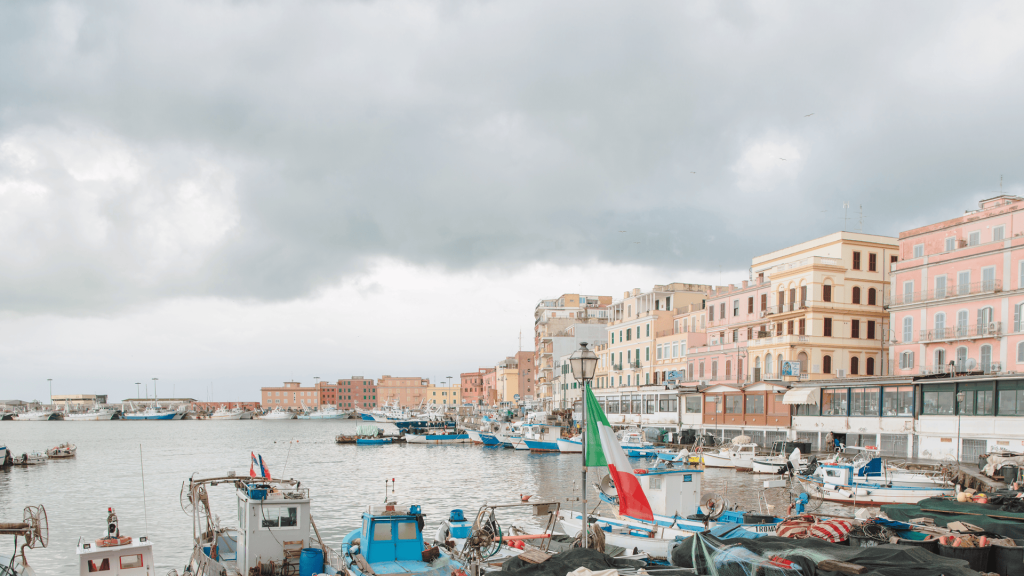
Country Overview
Italy is a highly attractive destination for relocation, offering a rich cultural heritage, world-class cuisine, a strong work–life balance, and vibrant cities such as Milan, Rome, Florence, Bologna and Turin. With a population of approximately 58.9 million (ISTAT, January 2026) and around 5.56 million foreign residents, international professionals integrate easily into Italian workplaces and society.
Italy offers a highly skilled workforce with deep expertise across Fashion & Design, Manufacturing, Automotive, Financial Services, Technology and Life Sciences. As a member of the European Union and the Schengen Area, Italy applies a dual immigration system: EU/EEA/Swiss nationals enjoy freedom of movement, while non-EU citizens require a long-stay Type D visa and a Permesso di Soggiorno (residence permit) for stays exceeding 90 days.
*This guide is intended for general informational purposes only and should not be viewed as legal or tax advice. The information discussed may change frequently, and Access Financial cannot guarantee that all content remains current at all times.

2026 Key Legislative Updates
Second IRPEF bracket reduced from 35% to 33% under the 2026 Budget Law. Electronic meal vouchers tax-free up to €10/day (up from €8). Productivity bonuses taxed at just 1% (down from 5%) for 2026–2027. Neo-residenti flat tax raised to €300,000 for new elections from 1 January 2026. From 1 July 2026, TFR automatically transferred to pension funds for new private-sector hires unless they opt out within 60 days.
Contracts
Italian employment contracts are governed by the Italian Labour Code and sector-specific collective bargaining agreements (Contratti Collettivi Nazionali di Lavoro – CCNL). The type of contract determines your rights, obligations and job security. All contracts must be provided in writing.
Contract Types
| Contract Type | Duration | Key Features |
|---|---|---|
| Permanent (Tempo Indeterminato) | Indefinite | Standard open-ended contract; full employment rights including TFR, paid leave, sick leave and notice periods |
| Fixed-Term (Tempo Determinato) | Up to 12 months (extendable to 24) | Clear written justification required beyond 12 months; up to 4 renewals within 24 months |
| Apprenticeship (Apprendistato) | 6 months – 3 years | For workers aged 18–29; combines paid work with structured training |
| Part-Time (Part-Time) | Indefinite or fixed | Pro-rata rights equal to full-time employees; same protections |

Fixed-Term to Permanent — 24-Month Rule
If a fixed-term contract continues beyond 24 months (including renewals) with the same employer, it automatically converts to a permanent contract. Failure to comply with renewal rules in writing may also result in automatic conversion. Many employers convert valuable contractors to permanent status earlier to retain talent.
What Your Contract Must Include
Mandatory Provisions
- Job title, classification (livello) and description
- Start date and contract duration (if fixed-term)
- Gross salary and pay frequency
- Working hours and place of work
- Applicable CCNL (collective agreement)
- Probation period (Periodo di Prova)
- Notice period (Preavviso)
- TFR (severance) accrual reference
Common Additional Clauses
- Confidentiality (Riservatezza) provisions
- Intellectual property assignment
- Non-compete clause (Patto di Non Concorrenza)
- Variable pay, bonus and commission structure
- Meal vouchers (Buoni Pasto) and benefits
- Supplementary pension fund enrolment
- Disciplinary and grievance procedure reference
Working Hours & Overtime
The standard full-time working week in Italy is 40 hours, typically structured as 8 hours per day, Monday to Friday. Many CCNLs set lower weekly hours (37–38 hours) depending on the sector. The maximum legal working time, including overtime, must not exceed 48 hours per week averaged over 4 months.
| Parameter | Rule | Notes |
|---|---|---|
| Standard hours | 40 hrs/week | Often reduced to 37–38 hrs by CCNL |
| Maximum weekly hours | 48 hrs avg | Averaged over a 4-month reference period |
| Daily rest | 11 consecutive hrs | Per 24-hour period — mandatory |
| Weekly rest | 24 hrs | Per 7-day period |
| Rest break (>6 hrs) | Mandatory | Duration defined by CCNL |
| Overtime (Straordinario) cap | 250 hrs/year | Unless otherwise agreed in CCNL |
| Overtime pay | +15% to +50% | Or equivalent time off in lieu (riposo compensativo) |
Night & Weekend Work Tax Relief
Under the 2026 Budget Law, a 15% substitute tax applies to night work, holiday work, weekend work and shift allowances (up to €1,500) for employees earning ≤ €40,000 in 2025. Workers can opt out and choose ordinary taxation.
Probation Period
The probation period (Periodo di Prova) is contractual and must be clearly outlined in writing in the employment contract. Length depends on the role and applicable CCNL.
| Parameter | Standard practice | Legal notes |
|---|---|---|
| Typical duration (standard employees) | Up to 3 months | Defined in writing within the contract |
| Typical duration (managerial/executive) | Up to 6 months | Common in finance, IT and senior professional roles |
| Notice during probation | Minimal or none | Either party can terminate, unless contract specifies otherwise |
| Day-one statutory rights | Full from day one | Health and safety, anti-discrimination, INPS coverage |
Immigration & Work Visas
Italy operates a dual immigration system. EU/EEA/Swiss nationals enjoy freedom of movement and need only register with the local Anagrafe if staying longer than 90 days. Non-EU citizens require a long-stay Type D visa, followed by a Permesso di Soggiorno (residence permit) applied for within 8 working days of arrival.
UK Citizens — Post-Brexit Rules
Post-Brexit, UK nationals are treated as non-EU citizens and generally require a Type D visa for stays over 90 days. The two-step process applies: employer nulla osta, then visa application at the Italian consulate.
Main Work Visa Routes
| Visa Route | Min. Salary | Sponsor? | Duration |
|---|---|---|---|
| Employee Visa (Lavoro Subordinato) | Per CCNL minimum | Yes — nulla osta | 1–2 years; renewable |
| EU Blue Card (Carta Blu UE) | ~€35,000/yr (1.5× avg wage) | Yes — but no quota | Up to 4 years; renewable |
| Self-Employment (Lavoro Autonomo) | 1.5–2× avg wage | No — quota-limited | 2 years; renewable |
| Intra-Company Transfer (ICT) | Per CCNL for role | Italian entity required | Up to 3 years (managers/specialists) |
| Seasonal Work (Lavoro Stagionale) | Per CCNL | Yes — nulla osta | Up to 6–9 months per year |
Two-Step Visa Process
Most non-EU work visas follow a two-step process: (1) the Italian employer applies for a work authorisation (nulla osta) through the Sportello Unico per l’Immigrazione; (2) once approved, the worker applies for the Type D visa at the Italian consulate in their home country. Typical processing time for a Type D work visa is 8 weeks. Within 8 working days of arrival in Italy, the worker must apply for the Permesso di Soggiorno at the local post office (Poste Italiane) and attend an appointment at the Questura.
Leave Entitlements
Italy’s statutory leave entitlements are comprehensive and many CCNLs offer enhanced benefits above the legal floor.
Annual Leave (Ferie Annuali)
| Parameter | Entitlement | Notes |
|---|---|---|
| Statutory minimum | 4 weeks (20 working days) | Paid at full base salary |
| Market standard (CCNL) | 26–28 days | Most professional CCNLs add extra days |
| Mandatory taking | At least 2 weeks/year | Cannot be paid out in lieu while employed |
| Carry-over | Within 18 months | Unused leave may be forfeited unless otherwise agreed |
Parental Leave
| Leave type | Duration | Pay | From |
|---|---|---|---|
| Maternity (Congedo di Maternità) | 5 months (2 pre + 3 post; or 1+4) | 80% of salary (INPS) | Day one |
| Paternity (Congedo di Paternità) | 10 working days (20 if multiple births) | 100% of salary (INPS) | Day one |
| Parental Leave | Up to 11 months shared | 30% for 6 months; unpaid thereafter | Until child age 14 (raised from 12 in 2026) |
| Care for sick child | 10 working days/year (doubled from 5) | Unpaid | Until child age 14 (raised from 8 in 2026) |
| Marriage leave | 15 calendar days | 100% | Within 30 days of wedding |
Sick Leave (Malattia)
| Parameter | Rule |
|---|---|
| First 3 days | Paid by employer (partial coverage in some sectors) |
| Day 4 to day 20 | INPS covers 50%–66% of salary |
| After day 21 | INPS up to two-thirds; employer top-up per CCNL |
| Maximum duration | 180–365 days (varies by CCNL) |
| Medical certificate | Required from day one (sent electronically to INPS) |
Public Holidays 2026
Italy observes 12 national public holidays in 2026, plus additional patron-saint holidays observed locally (for example, Sant’Ambrogio in Milan on 7 December and Santi Pietro e Paolo in Rome on 29 June). If a public holiday falls on a weekend, it is not moved to a weekday — employees are not entitled to an extra day off.
| Date | Day | Holiday |
|---|---|---|
| 1 January | Thursday | New Year’s Day (Capodanno) |
| 6 January | Tuesday | Epiphany (Epifania) |
| 5 April | Sunday | Easter Sunday (Pasqua) |
| 6 April | Monday | Easter Monday (Pasquetta) |
| 25 April | Saturday | Liberation Day (Festa della Liberazione) |
| 1 May | Friday | Labour Day (Festa dei Lavoratori) |
| 2 June | Tuesday | Republic Day (Festa della Repubblica) |
| 15 August | Saturday | Assumption Day (Ferragosto) |
| 1 November | Sunday | All Saints’ Day (Ognissanti) |
| 8 December | Tuesday | Immaculate Conception (Immacolata Concezione) |
| 25 December | Friday | Christmas Day (Natale) |
| 26 December | Saturday | St. Stephen’s Day (Santo Stefano) |
Notice Periods
Notice periods (Preavviso) in Italy are governed by the applicable CCNL rather than a single statutory rule. They depend on seniority, job level (livello) and length of service. Notice must always be given in writing.
| Job category | Typical notice range | Notes |
|---|---|---|
| Operai / Impiegati (entry-mid level) | 15 – 45 days | Increases with seniority |
| Quadri / Senior Impiegati | 30 – 60 days | Defined by CCNL classification |
| Dirigenti (executives) | 60 – 90 days (often longer) | Frequently 6–12 months in dirigenti CCNL |
| Payment in lieu (indennità sostitutiva) | Allowed | Equivalent to gross salary for the notice period |
Termination & Severance (TFR)
Italian employment law provides significant employee protections. Dismissals must always be communicated in writing and supported by a valid reason — either just cause (giusta causa) for serious misconduct, or justified objective/subjective reason (giustificato motivo) related to economic factors or performance.
Severance Pay (Trattamento di Fine Rapporto – TFR)
| Parameter | Rule |
|---|---|
| Entitlement | All employees — regardless of how employment ends |
| Accrual rate | ≈ 1 month’s gross salary per year of service |
| Payment | Lump sum on termination, or transferred to pension fund |
| Taxation | Separate progressive rate (favourable to ordinary IRPEF) |
| Other entitlements on termination | Unused leave compensation + outstanding salary |

TFR Auto-Enrolment from 1 July 2026
Under the 2026 Budget Law, TFR for new private-sector hires is automatically transferred to the supplementary pension fund specified by the applicable CCNL unless the employee opts out within 60 days of hire (reduced from 6 months). Special protections also apply to pregnant workers, new parents and union representatives.
Income Tax (IRPEF)
Italy operates a progressive personal income tax system (IRPEF — Imposta sul Reddito delle Persone Fisiche). Employees are taxed via PAYE-style withholding through payroll. Regional and municipal surcharges apply on top of national rates.
IRPEF Bands 2026
| Band | Annual Income | Rate 2026 | Rate 2025 |
|---|---|---|---|
| First bracket | Up to €28,000 | 23% | 23% |
| Second bracket | €28,001 – €50,000 | 33% | 35% |
| Third bracket | Above €50,000 | 43% | 43% |
| Local surcharge | Range | Notes |
|---|---|---|
| Regional surcharge (Addizionale Regionale) | 0.70% – 3.33% | Varies by region |
| Municipal surcharge (Addizionale Comunale) | 0% – 0.9% | Varies by municipality |
| Combined effective top rate | ≈ 47% | In high-surcharge regions/cities |
Impatriate Regime — 50% Tax Exemption for Expats
Qualifying inbound workers benefit from a 50% exemption on Italian employment/self-employment income (rising to 60% with a minor child), applied on income up to €600,000/year for 5 tax years. Requires a university degree, no tax residency in Italy for the 3 prior years, and a 4-year residency commitment.
VAT (IVA)
| Rate | % | Applies to |
|---|---|---|
| Standard | 22% | Most goods and services |
| Reduced | 10% | Accommodation, restaurants, certain transport |
| Reduced | 5% | Some health and social services |
| Super-reduced | 4% | Essential food, medical devices, books |
| Flat-rate regime threshold | €85,000 | Regime Forfettario for eligible self-employed |
Benefits
Italian statutory benefits are comprehensive, anchored by the national health service (SSN) and INPS-administered welfare. Competitive employers add supplementary benefits to attract and retain professional talent.
Mandatory Statutory Benefits
| Benefit | Rate / Amount | Notes |
|---|---|---|
| Public Healthcare (SSN) | Free at point of use | Tessera Sanitaria issued on registration |
| INPS Pension Scheme | Mandatory enrolment | Funded by employer + employee contributions |
| Annual Leave | 4 weeks min. | Pro-rata; market standard 26–28 days under CCNL |
| Maternity Pay | 80% of salary | 5 months; often topped up by employer |
| Paternity Pay | 100% of salary | 10 working days (20 for multiple births) |
| TFR Severance | ≈ 1 month/year | All employees, regardless of how employment ends |
| Universal Family Allowance | Means-tested | Assegno Unico Universale via INPS |
Market-Standard Supplemental Benefits
| Benefit | Prevalence | Typical provision |
|---|---|---|
| Meal Vouchers (Buoni Pasto) | Very common | €5–€10/day; tax-free up to €10 (electronic) or €4 (paper) from Jan 2026 |
| Supplementary Pension Fund | Common via CCNL | Often with employer matching contribution |
| Private Health Insurance | Common (professional employers) | Reduces waiting times; access to private clinics |
| Company Car / Mobility Allowance | Common for senior roles | Favourable taxation for electric vehicles |
| Productivity Bonus (Premio di Risultato) | Widespread | Taxed at just 1% in 2026–2027 up to €5,000 (income ≤ €80k) |
| Smart Working / Hybrid | Standard post-2020 | 2–3 days remote common in tech and finance |
Pension System
Italy operates a two-pillar pension system: the mandatory public pension administered by INPS, and optional supplementary pension funds (Fondi Pensione) — either open funds or closed/negotiated funds linked to specific CCNLs.
| Parameter | 2026 | Notes |
|---|---|---|
| Statutory retirement age | 67 years | With at least 20 years of contributions |
| Early retirement (Pensione Anticipata) | 42 years 10 months (M) / 41 years 10 months (F) | Contribution-based, regardless of age |
| Employee contribution | 9% – 10% | Via payroll deduction |
| Employer contribution | ≈ 23% – 24% | Pension share of total INPS contribution |
| Self-employed (Gestione Separata) | 24% – 33.72% | Of declared income |
| TFR auto-enrolment (new hires) | From 1 July 2026 | 60 days to opt out into supplementary fund |
Insurances
Mandatory and recommended insurances for employers, employees, and contractors in Italy.
| Insurance | Coverage | Required by |
|---|---|---|
| INAIL Workplace Accident Insurance | Accidents & occupational illness | Mandatory for all employers (DPR 1124/1965) |
| Motor Insurance (RC Auto) | Third-party liability | Codice della Strada — mandatory |
| Professional Indemnity (RC Professionale) | Negligence claims | Mandatory for regulated professions (doctors, lawyers, engineers, architects, accountants) |
Professional Indemnity Insurance — Contractors
Often contractually required by end-clients in Italy. Mandatory for regulated professions and strongly recommended for consultancy, finance and IT roles. Minimum cover is typically €1M; financial services and technology engagements often require €2M+. AF can advise on appropriate cover for your sector.
Private Health Insurance
| Provider | Typical monthly cost | Type |
|---|---|---|
| UniSalute | €50–€150 (individual) | Comprehensive |
| Generali Italia | €60–€180 (individual) | Comprehensive |
| Allianz Italia | €70–€200 (individual) | Comprehensive |
| IMG (international plans) | Quote-based | Expat & international coverage |
AF Solutions
Access Financial has supported clients across Europe for over 22 years — including end-clients, recruitment agencies and contractors operating in Italy.
For End-Clients
Managing a contingent workforce can be complex. Our solutions streamline workforce management, making it simple, compliant, and cost-effective.
For Recruiters
We offer a complete suite of services, allowing you to simply, compliantly, and efficiently place your candidates internationally, with minimum fuss.
For Contractors
Focus on what you do best and let us take care of your payroll, tax compliance, social security, and immigration needs.

Free Consultation
FAQ
Find answers to our most frequently asked questions below.
What solutions do you offer in Italy?
In Italy, Access Financial provides one compliant engagement model:
Self-employment: Where an engagement genuinely meets the criteria for self-employed status, we register the contractor compliantly, manage their filing obligations throughout the contract term, and deregister them at the end of the assignment.
Is contractor misclassification a high risk under an AOR engagement?
Misclassification typically occurs when contractors are treated as employees in practice — fixed hours, integration into the team, no right of substitution, direct supervision, and so on. Prevention requires clear engagement frameworks, standardised processes, documented evidence of independence, and recurring audits. Accountability and the right technology are key to staying compliant at scale, particularly as tax authorities increasingly use data analytics and algorithmic checks to flag suspect arrangements.
At Access Financial, we help our clients minimise this risk by designing tailored classification frameworks, onboarding checklists, contractual safeguards, and recurring compliance audits.
What is your pricing model?
Managing international employees in Italy involves coordinating compliant onboarding, payroll, contracts, benefits and immigration Our standard management fee is 5% of the contract value, with a minimum of €550. We also offer volume discounts on bulk engagements. To discuss pricing for your specific scenario, please get in touch with our team here: https://accessfinancial.com/#get-started.








Social Security (INPS)
Italy’s social security system is managed by the Istituto Nazionale della Previdenza Sociale (INPS). Contributions fund pensions, sickness, maternity, family allowances and unemployment insurance.
Employer Contributions
Employee Contributions