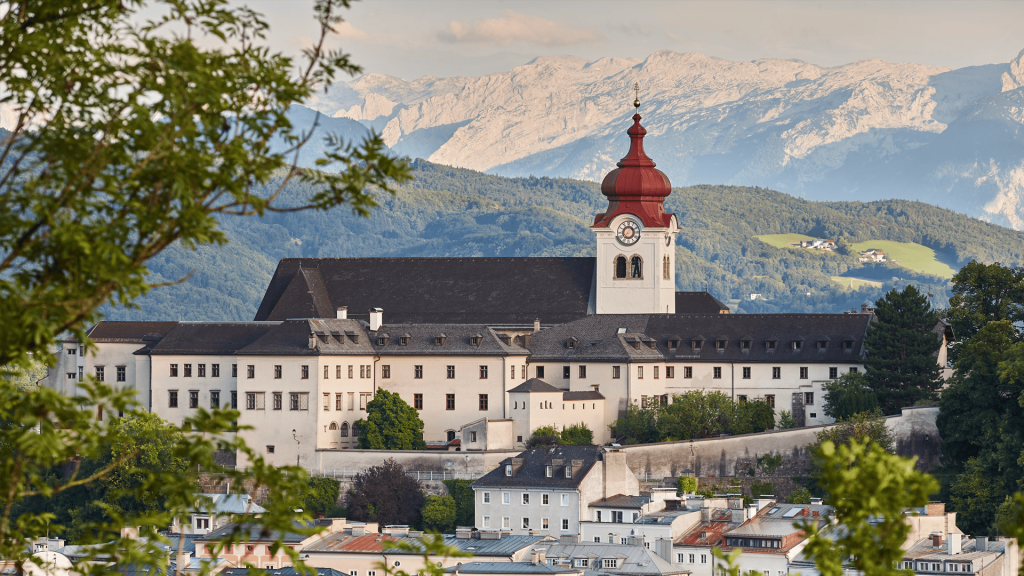
Country Overview
Austria is a highly attractive destination for international professionals, offering a strong economy, excellent public services, and an outstanding quality of life. The capital, Vienna, consistently ranks among the top cities globally for liveability and expat satisfaction. From the alpine landscapes and ski resorts of the west to historic cities such as Salzburg, Graz, Linz, and Innsbruck, Austria combines rich cultural heritage with modern innovation.
Austria offers a highly skilled workforce with deep expertise across Financial Services, Technology, Engineering, Life Sciences, and Professional Services. Approximately 26% of residents are foreign nationals, so international teams integrate naturally. German is the official language, but English is widely spoken in business and tourism. Non-EU/EEA/Swiss nationals require work authorisation under Austria’s points-based system (the Red-White-Red Card or EU Blue Card).
*This guide is intended for general informational purposes only and should not be viewed as legal or tax advice. The information discussed may change frequently, and Access Financial cannot guarantee that all content remains current at all times.

2026 Key Legislative Updates
Income tax brackets adjusted upwards by 1.73% to offset inflation — tax-free threshold now €13,541. Social insurance contribution ceiling rises to €6,930/month. Pendlereuro (commuter euro) tripled from €2 to €6 per km. EU Blue Card minimum salary set at €55,678/year. VAT exemption introduced on contraceptives and female hygiene products.
Contracts
Austrian employment contracts (Arbeitsvertrag) can be written or oral, but a written contract or at least a written employment letter (Dienstzettel) is highly recommended and is usually provided. Most industries are governed by a Collective Bargaining Agreement (Kollektivvertrag) that sets minimum standards for pay, hours, bonuses, and notice — covering around 98% of employees.
Contract Types
| Contract Type | Duration | Key Features |
|---|---|---|
| Permanent (unbefristet) | Indefinite | Open-ended; continues until terminated by either party with notice |
| Fixed-Term (befristet) | Specified end date | Ends on a date or project completion; repeated renewals may convert to permanent |
| Part-Time (Teilzeit) | Indefinite or fixed | Pro-rata rights equal to full-time; no less favourable treatment permitted |
| Freelance Service (freier Dienstvertrag) | Project-based | For self-employed contractors; social insurance via SVS |

Collective Bargaining Agreements (Kollektivvertrag)
Around 98% of Austrian employees are covered by a sector-specific Kollektivvertrag that sets minimum pay, working hours, overtime rates, and bonuses (including the 13th and 14th month salaries). Your contract may simply reference the applicable KV rather than restate every clause — make sure you know which one applies.
What Your Contract Must Include
Mandatory from Day One
- Job title and description
- Start date and contract duration (if fixed-term)
- Gross salary (including 13th and 14th month payments)
- Working hours and place of work
- Holiday entitlement
- Notice period (both sides)
- Reference to applicable Kollektivvertrag
- Pension and severance fund details (Abfertigung neu)
Common Additional Clauses
- Confidentiality / NDA provisions
- Intellectual property assignment
- Restrictive covenants (non-compete, non-solicit)
- Overtime arrangements (Überstundenpauschale)
- Bonus and commission structure
- All-in salary clause (covering overtime)
- Home-office / remote-working agreement
Working Hours & Overtime
The Austrian Working Time Act (Arbeitszeitgesetz) sets maximum hours, rest breaks, and overtime rules. Standard full-time hours are 40 per week, though many Kollektivverträge reduce this to 38.5 hours per week.
| Parameter | Rule | Notes |
|---|---|---|
| Standard full-time hours | 38.5 – 40 hrs/week | Set by Kollektivvertrag or contract; 8 hrs/day standard |
| Maximum daily hours | 12 hrs/day | Including overtime |
| Maximum weekly hours | 60 hrs/week | 17-week average must not exceed 48 hrs/week |
| Daily rest | 11 consecutive hrs | Per 24-hour period — mandatory |
| Rest break | 30 min per 6 hrs | Required for shifts longer than 6 hours |
| Weekly rest | 36 hrs | Including Sunday in most sectors |
| Overtime premium | +50% minimum | Time-and-a-half or equivalent time off in lieu |
Home Office Act (Homeoffice-Gesetz)
Remote work must be agreed in writing between employer and employee. Employers must provide or reimburse work equipment, and a tax-free home-office allowance of up to €300/year is permitted. Accident insurance covers home-office days.
Probation Period
Austrian law allows a probationary period (Probemonat) of up to 1 month for regular employment. During probation, either party can terminate immediately and without reason.
| Parameter | Standard practice | Legal notes |
|---|---|---|
| Maximum duration | 1 month | Statutory maximum for regular employees; cannot be extended |
| Apprenticeships | 3 months | Special statutory rule |
| Notice during probation | None required | Immediate termination by either side |
| Day-one statutory rights | Full from day one | Social insurance, holiday accrual, sick pay, anti-discrimination |
Immigration & Work Permits
Austria operates a points-based immigration system for non-EU nationals. EU/EEA and Swiss citizens have full freedom of movement and may work without a permit, but must register a residence certificate (Anmeldebescheinigung) within 4 months if staying longer than 3 months.
Meldezettel — Address Registration within 3 Days
Everyone moving to Austria — regardless of nationality — must register their residential address by submitting a Meldezettel at the local Meldeamt within 3 days of moving in. The confirmation (Meldebestätigung) is required for bank accounts, mobile contracts, and most official procedures.
Main Permit Routes for Non-EU Nationals
| Permit Route | Min. Salary (2026) | Sponsor? | Duration |
|---|---|---|---|
| RWR Card — Very Highly Qualified | €8,316 gross/month | Employer (after job offer) | 24 months; renewable |
| RWR Card — Other Key Workers | €3,465 gross/month | Yes | 24 months; renewable |
| RWR Card — Shortage Occupations | KV minimum | Yes | 24 months; renewable |
| EU Blue Card | €55,678 gross/year | Yes | 2 years; EU-wide mobility |
| RWR Card — Self-Employed | Business plan based | No (own business) | 24 months; renewable |
| Job Seeker Visa | No salary required | No | 6 months; not for working |
| Fee | Cost | Notes |
|---|---|---|
| RWR Card / EU Blue Card application | ~€160 | Plus ~€20 for biometric data |
| Registration certificate (EU citizens) | ~€15 | Anmeldebescheinigung |
| Meldezettel registration | Free | Within 3 days of moving in |
| Police clearance certificate | Varies by country | Required from country of origin; less than 3 months old |
Leave Entitlements
Austrian statutory leave entitlements are among the most generous in Europe. Most professional employers apply at least the statutory floor — many Kollektivverträge add to it.
Annual Leave
| Parameter | Entitlement | Notes |
|---|---|---|
| Statutory minimum | 25 working days/yr | 5 weeks; based on 5-day working week |
| After 25 years of service | 30 working days/yr | 6 weeks; combined service across all employers counts |
| Accrual in first 6 months | Pro-rata (~2.08 days/month) | Full annual quota available from 7th month onwards |
| Holiday pay rate | Normal remuneration | Including regular bonuses and overtime averages |
Parental Leave
| Leave type | Duration | Pay | From |
|---|---|---|---|
| Maternity (Mutterschutz) | 8 wks before + 8 wks after birth | Wochengeld (~average net income) | Day one |
| Maternity (complications/C-section/twins) | Up to 12 wks after birth | Wochengeld | Day one |
| Paternity (Papa-Monat) | 1 month | Familienzeitbonus (~€700 total) | Day one |
| Parental (Elternkarenz) | Up to child’s 2nd birthday | Kinderbetreuungsgeld | After maternity leave ends |
Sick Leave (Entgeltfortzahlung)
| Length of service | Full pay | Half pay |
|---|---|---|
| Year 1 | 6 weeks | +4 weeks |
| Year 2 – 15 | 8 weeks | +4 weeks |
| Year 16 – 25 | 10 weeks | +4 weeks |
| Over 25 years | 12 weeks | +4 weeks |
Public Holidays 2026
Austria has 13 nationwide public holidays in 2026. Holidays falling on a weekend are not transferred to a weekday.
| Date | Day | Holiday |
|---|---|---|
| 1 January | Thursday | New Year’s Day (Neujahr) |
| 6 January | Tuesday | Epiphany (Heilige Drei Könige) |
| 6 April | Monday | Easter Monday (Ostermontag) |
| 1 May | Friday | State Holiday (Staatsfeiertag) |
| 14 May | Thursday | Ascension Day (Christi Himmelfahrt) |
| 25 May | Monday | Whit Monday (Pfingstmontag) |
| 4 June | Thursday | Corpus Christi (Fronleichnam) |
| 15 August | Saturday | Assumption (Mariä Himmelfahrt) |
| 26 October | Monday | National Day (Nationalfeiertag) |
| 1 November | Sunday | All Saints’ Day (Allerheiligen) |
| 8 December | Tuesday | Immaculate Conception (Mariä Empfängnis) |
| 25 December | Friday | Christmas Day (Christtag) |
| 26 December | Saturday | St. Stephen’s Day (Stefanitag) |
Notice Periods
Statutory notice periods for salaried employees (Angestellte) are set by the Angestelltengesetz and increase with length of service. Notice may be extended by contract or Kollektivvertrag but not shortened.
| Length of service | Employer notice (statutory) | Employee notice |
|---|---|---|
| Up to 2 years | 6 weeks | 1 month |
| After 2 years | 2 months | 1 month |
| After 5 years | 3 months | 1 month |
| After 15 years | 4 months | 1 month |
| After 25 years | 5 months | 1 month |
Termination & Severance
Austrian employment law provides strong employee protections. Dismissals must observe statutory notice and may be challenged in the Labour Court if considered socially unjustified.
Severance Fund — Abfertigung Neu
| Parameter | Rule |
|---|---|
| Employer contribution | 1.53% of gross salary monthly |
| Fund manager | Mitarbeiter-Vorsorgekasse (external) |
| Payout on employer termination or mutual agreement | Available from day one |
| Payout on voluntary resignation | After 3+ years of service |
| Alternative use | Retained as supplementary pension |

Protected Categories — Special Dismissal Protection
Pregnant employees, parents on Karenz, employees with disabilities (Behinderteneinstellungsgesetz), and works council members can only be dismissed with prior approval from a court or competent authority. Employers must obtain consent before issuing notice.
Income Tax
Austria runs a calendar-year tax system. Employees are taxed via PAYE (Lohnsteuer), with the employer withholding tax monthly. The 13th and 14th salaries (“special payments”) benefit from a favourable flat tax treatment.
Income Tax Bands 2026
| Band | Annual Income | Rate 2026 | Rate 2025 |
|---|---|---|---|
| Tax-free | Up to €13,541 | 0% | 0% |
| Band 2 | €13,541 – €21,992 | 20% | 20% |
| Band 3 | €21,992 – €36,458 | 30% | 30% |
| Band 4 | €36,458 – €70,365 | 40% | 40% |
| Band 5 | €70,365 – €104,859 | 48% | 48% |
| Band 6 | €104,859 – €1,000,000 | 50% | 50% |
| Top rate | Above €1,000,000 | 55% | 55% |
13th & 14th Salaries — Flat 6% Rate
Austrian employees receive 14 monthly salaries. The 13th (Urlaubsgeld, June) and 14th (Weihnachtsgeld, November/December) are taxed at a flat 6% rate — with the first €620 completely tax-free. This typically saves €2,000–€5,000/year vs. progressive taxation.
Key Tax Credits & Deductions 2026
| Credit / Deduction | Amount | Eligibility |
|---|---|---|
| Employee Tax Credit (Arbeitnehmerabsetzbetrag) | ~€487/year | All employees — applied automatically |
| Single-Earner / Single-Parent Credit | €601 + €212 per second child | Sole income earner or single parent |
| Family Bonus Plus | Up to €2,000/child/year | Children aged 0–18 (€650 for 18–24 in education) |
| Pendlerpauschale (commuter) | Distance-based | Long-distance commuters |
| Pendlereuro (commuter euro) | €6/km/year | Tripled in 2026 from €2 to €6 |
VAT (Umsatzsteuer)
| Rate | % | Applies to |
|---|---|---|
| Standard | 20% | Most goods and services |
| Reduced | 10% | Food, books, public transport, rent, pharmaceuticals |
| Reduced | 13% | Hotel accommodation, cultural events, live performances |
| Zero / Exempt | 0% | Contraceptives & female hygiene products (new 2026), exports |
| Small-business threshold | €35,000 | Annual turnover below which VAT registration is optional |
Benefits
Austrian statutory benefits are comprehensive — universal public healthcare, generous parental leave, and long-tenure entitlements. Competitive employers add supplemental benefits to attract and retain professional talent.
Mandatory Statutory Benefits
| Benefit | Rate / Amount | Notes |
|---|---|---|
| Public Health Insurance (ÖGK) | ~7.65% combined | Free at point of use; covers dependents at no extra cost |
| 13th & 14th Salaries | 2 extra months | Urlaubsgeld (June) + Weihnachtsgeld (Nov/Dec); taxed at 6% |
| Annual Leave | 25–30 working days | 5 weeks; rises to 6 weeks after 25 years’ service |
| Sick Pay | 6–12 weeks full pay | Plus 4 weeks half pay, then Krankengeld from ÖGK |
| Severance Fund (Abfertigung Neu) | 1.53% of salary | Paid into a Mitarbeiter-Vorsorgekasse |
| State Pension | ~80% of average earnings | After 45 contribution years at age 65 (target ratio) |
Market-Standard Supplemental Benefits
| Benefit | Prevalence | Typical provision |
|---|---|---|
| Private Health Insurance (Zusatzversicherung) | Common (professional sectors) | Private hospital room and choice of doctor |
| Company Pension (Pensionskasse) | Larger employers | Supplementary defined-contribution pension |
| Meal Vouchers (Essensgutscheine) | Very common | Up to €8/day tax-free |
| Public Transport / Klimaticket | Common | Annual pass (€1,095) often subsidised |
| Home Office Allowance | Standard since 2022 | Up to €300/year tax-free |
| Company Car | Senior / sales roles | Sachbezug at 2% (1.5% if electric) of vehicle value |
Pension System
Austria’s pension system is a three-pillar structure: the public state pension (Pensionsversicherung), occupational pensions, and private retirement savings. The state pension is the main pillar for most workers.
| Parameter | 2026 | Notes |
|---|---|---|
| State pension age (men) | 65 | Standard retirement age |
| State pension age (women) | 62 | Rising by 6 months/year — reaches 65 by 2033 |
| Minimum contribution years | 15 years | 180 insurance months required for entitlement |
| Target replacement rate | ~80% | After 45 contribution years at age 65 (80/45/65 rule) |
| Employer pension contribution | 12.55% | Of gross salary up to ceiling |
| Employee pension contribution | 10.25% | Of gross salary up to ceiling |
| Contribution ceiling (monthly) | €6,930 | Up from €6,450 in 2025 |
Insurances
Mandatory and recommended insurances for employers, employees, and contractors in Austria.
| Insurance | Cover | Required by |
|---|---|---|
| Public Health Insurance (ÖGK) | Universal | ASVG — mandatory for all employees |
| Accident Insurance (AUVA) | Workplace accidents | ASVG — employer-funded |
| Motor Third-Party Liability | Mandatory | Required to register a vehicle (KFG) |
Professional Indemnity Insurance (Berufshaftpflicht) — Contractors
Mandatory only for regulated professions (doctors, lawyers, architects, insurance brokers), but contractually required by many end-clients in IT, consulting, and engineering. Minimum cover of €1M is standard; financial services and technology roles typically require €2M+. AF can advise on appropriate cover for your sector.
Private Health Insurance (Zusatzversicherung)
| Provider | Typical monthly cost | Type |
|---|---|---|
| UNIQA | €80–€220 (individual) | Comprehensive hospital cover |
| Wiener Städtische | €75–€200 (individual) | Comprehensive hospital cover |
| Generali | €70–€180 (individual) | Modular policies |
| Merkur Versicherung | €70–€190 (individual) | Health and prevention focus |
AF Solutions
Access Financial has operated in Austria for over 22 years, supporting end-clients, recruitment agencies, and contractors.
For End-Clients
Managing a contingent workforce can be complex. Our solutions streamline workforce management, making it simple, compliant, and cost-effective.
For Recruiters
We offer a complete suite of services, allowing you to simply, compliantly, and efficiently place your candidates internationally, with minimum fuss.
For Contractors
Focus on what you do best and let us take care of your payroll, tax compliance, social security, and immigration needs.

Free Consultation
FAQ
Find answers to our most frequently asked questions below.
What solutions do you offer in Austria?
In Austria, Access Financial provides one compliant engagement model:
Self-employment: Where an engagement genuinely meets the criteria for self-employed status, we register the contractor compliantly, manage their filing obligations throughout the contract term, and deregister them at the end of the assignment.
Is contractor misclassification a high risk under an AOR engagement?
Misclassification typically occurs when contractors are treated as employees in practice — fixed hours, integration into the team, no right of substitution, direct supervision, and so on. Prevention requires clear engagement frameworks, standardised processes, documented evidence of independence, and recurring audits. Accountability and the right technology are key to staying compliant at scale, particularly as tax authorities increasingly use data analytics and algorithmic checks to flag suspect arrangements.
At Access Financial, we help our clients minimise this risk by designing tailored classification frameworks, onboarding checklists, contractual safeguards, and recurring compliance audits.
What is your pricing model?
Our standard management fee is 5% of the contract value, with a minimum of €550. We also offer volume discounts on bulk engagements. To discuss pricing for your specific scenario, please get in touch with our team here: https://accessfinancial.com/#get-started.












Social Insurance
Austria’s social insurance system (Sozialversicherung) funds the public health system (ÖGK), state pension, unemployment benefits, and workplace accident insurance.
2026 Change — Contribution Ceiling Increased
The monthly social insurance contribution ceiling (Höchstbeitragsgrundlage) rises from €6,450 in 2025 to €6,930 in 2026. Earnings above this threshold are not subject to pension, health, or unemployment contributions.
Employer Contributions
Employee Contributions